What Is Carbon-Neutral Investing?
Carbon-neutral investing means that the total greenhouse gas emissions attributable to a portfolio’s holdings, measured on a proportionate ownership basis and independently verified, are offset in full by certified carbon credits. The net emissions of the portfolio, after accounting for offsets, are zero or below zero.
Most investment strategies described as “sustainable” address carbon in one of two ways. The first is exclusion: removing fossil fuel companies from the portfolio, which reduces the portfolio’s carbon intensity relative to a conventional benchmark. The second is integration: incorporating carbon risk as one factor among many in an investment analysis framework. Both approaches reduce a portfolio’s carbon footprint. Neither achieves carbon neutrality.
This is a meaningful distinction. A fossil-free portfolio may have significantly lower carbon emissions than a conventional index, but it is almost certainly not zero. Achieving carbon neutrality requires a complete accounting of the portfolio’s residual emissions and a deliberate decision to purchase verified offsets that cover them in full.
Stance pays for the offsets itself. Not as a fee passed to the portfolio. Not as a cost passed to investors. As a firm commitment, out of Stance’s own operating resources, as a matter of principle. That commitment is specific to the Stance Sustainable Beta strategy.
This piece explains what carbon-neutral investing actually involves: how a portfolio’s carbon footprint is calculated, what makes an offset credible, how Stance’s partnership with Holganix and its HGX division works in practice, and what it means for the farmers whose land and livelihoods are on the other side of the transaction.
How a Portfolio’s Carbon Footprint Is Calculated

Every company in a publicly traded equity portfolio has a greenhouse gas emissions profile: the carbon dioxide and other gases it emits in the course of its operations. Those emissions are categorized into three scopes:
- Scope 1 emissions are direct: the gases a company releases from its own operations, facilities, and vehicles.
- Scope 2 emissions are indirect: the emissions generated by producing the electricity and energy the company purchases and consumes.
- Scope 3 emissions cover everything else: the full value chain, from raw material extraction through product disposal. Scope 3 is often the largest category but is also the hardest to measure, least consistently reported, and most prone to double-counting across portfolios. For fund-level certification purposes, Ethos (the independent certification body that certifies the Stance Sustainable Beta strategy as carbon neutral) measures Scope 1 and Scope 2 emissions only, consistent with current industry standards for fund-level carbon accounting.
The carbon footprint of an investment portfolio is not simply the sum of all its holdings’ emissions. It is the proportionate share of those emissions that corresponds to the portfolio’s ownership stake in each company. The calculation Ethos uses is:
Portfolio Carbon Footprint = Sum of (Scope 1 + Scope 2 emissions of each holding × portfolio’s percentage ownership of that holding)
Percentage ownership is calculated as the market value of the portfolio’s investment in a company divided by that company’s total market capitalization. An investment fund that owns 0.1% of a company is responsible, on this basis, for 0.1% of that company’s Scope 1 and Scope 2 emissions.
This proportionate attribution method is important because it is honest. It does not treat a small investment in a large company as if it carries no emissions responsibility. It does not allow a fund to claim carbon neutrality simply because it holds a lot of low-carbon companies. It quantifies the actual emissions burden associated with the portfolio’s real-world ownership stakes, and it holds that number up against the offsets purchased to neutralize it.
The net emissions equation that determines certification is:
Net Emissions = Certified Carbon Footprint − Certified Carbon Offsets
Carbon neutrality is achieved when net emissions equal zero. Ethos certifies the Stance Sustainable Beta strategy as carbon neutral annually, confirming that the offsets purchased in a given period are sufficient to cover the portfolio’s verified Scope 1 and Scope 2 emissions footprint.
What Makes a Carbon Offset Credible
Not all carbon offsets are equal. The voluntary carbon market has historically been troubled by a significant proportion of low-quality credits: offsets that do not represent real, measurable, additional, or permanent emissions reductions. A company or fund that purchases cheap, uncredible offsets and claims carbon neutrality on the basis of them is engaged in a form of greenwashing, whether intentional or not.
The credibility of a carbon offset depends on four criteria:
- Additionality. The carbon removal must be additional, meaning it would not exist without the carbon market and the payment to the offset provider. A forest that was never at risk of being cut down does not represent additional carbon removal simply because someone pays to “protect” it.
- Measurability. The amount of carbon removed or avoided must be quantifiable through a defined, consistent methodology, ideally verified by independent third parties with access to real-world data from the project site.
- Permanence. The carbon removal must persist. Carbon stored in soil must remain stored, not released back into the atmosphere through changed farming practices or other disturbances. Programs that build durable storage into their methodology score significantly better on permanence than programs that rely on easily reversible changes.
- Verification. An independent third party must assess and rate the offset’s quality against these criteria. Independent verification is what separates credible offsets from assertions.
The Holganix HGX program that Stance has partnered with was selected specifically because it meets a demanding standard on all four of these dimensions.
Holganix and the HGX Program: Where the Offsets Come From

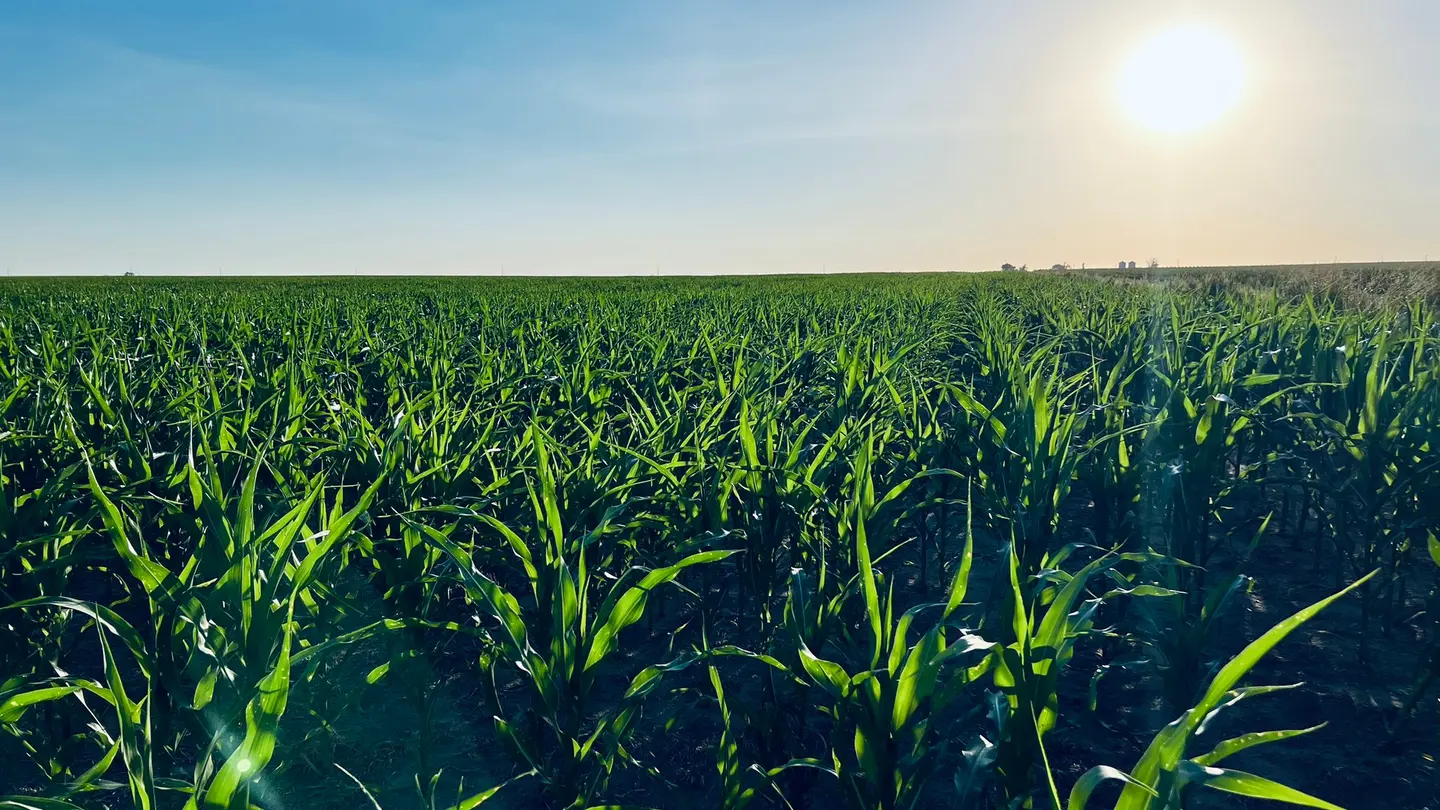
Holganix is a regenerative agriculture company founded in 2010 with a specific focus on restoring biological health to American farmland. Their flagship product, Bio 800+, functions as a probiotic for agricultural soil, delivering more than 800 species of beneficial soil microbes directly to the root zone at planting and after harvest. The microbial community that Bio 800+ establishes in the soil drives a cascade of improvements: better nutrient cycling, improved water retention, reduced compaction, and significantly enhanced ability to capture and store atmospheric carbon.
HGX is the environmental asset division of Holganix, launched formally in 2025 to commercialize the measurable environmental outcomes their farming program generates. Farmers who participate in HGX commit to a multi-year program: using Bio 800+ at key points in the growing cycle, adopting reduced-tillage or no-till practices for a ten-year period, and reducing synthetic nitrogen inputs. In return, HGX quantifies and verifies the environmental benefits their regenerative practices produce, converts those benefits into verified environmental assets, and pays farmers directly for what their soil generates.
Because healthier soil with higher organic matter content can hold up to 25,000 additional gallons of water per acre for every 1% increase in organic matter, the benefits extend to drought resilience and reduced runoff, outcomes that matter well beyond carbon according to Holganix. Further, fertilizer use has dropped by up to 40% according to Holganix. Farmers receive per-acre payments for participating in the program and implementing the required soil-health practices.. As of 2026, more than 1,000 farmers across more than 3 million US acres are enrolled in the program.
“This has given my son, the next generation, a chance to continue the family farm.” - Gary Behrendt, a Nebraska farmer in the HGX program.
“I have pretty much put the plow away, put the deep rippers away," - Bryan Mohrfeld, an Iowa farmer in the HGX program, who has cited savings on input costs such as fertilizer and fuel.
HGX quantifies outcomes through direct soil sampling, laboratory analysis, remote sensing, equipment and practice data, and rigorous quality-control processes. BeZero Carbon has independently assessed the project’s carbon-credit quality, and HGX is developing projects under Isometric’s recently announced soil carbon protocol. BeZero’s involvement means the environmental claims behind these credits have been evaluated against the same rigorous standards applied in institutional carbon markets. HGX methodologies are also undergoing additional third-party validation by Earthood.
Stance Pays for the Offsets
This is the part of the carbon-neutral story that is most worth understanding clearly.
When a fund or strategy is described as “carbon neutral,” there are several ways that neutrality can be achieved:
- The offset cost can be passed to the portfolio, treated as an expense that reduces returns.
- The offset cost can be passed to investors as a separate charge.
- The manager can claim neutrality based on exclusions alone, without purchasing any offsets.
- Or the manager can pay for the offsets out of its own resources, as a firm commitment that does not touch the portfolio or its investors.
Stance Capital does the last of these. The annual offset purchases that maintain the Stance Sustainable Beta strategy’s carbon-neutral certification are paid by Stance Capital as a firm, not by the portfolio, not by investors, and not through a higher fee passed to the strategy.
This decision reflects a straightforward conviction: if we believe that the carbon footprint of the companies in our portfolio is a real-world responsibility, then the cost of addressing that footprint is our responsibility as the manager, not an obligation we impose on the clients who trust us with their assets. The offsets are purchased because they are the right thing to do. The cost is borne by Stance because that is where it belongs.
The beneficiaries of that decision are on both sides. Investors in the Stance Sustainable Beta strategy hold a certified carbon-neutral portfolio without bearing any additional cost for that certification. And American farmers, the more than 1,000 Holganix HGX program participants whose regenerative practices generate the credits, receive direct payments for the environmental work their land and their labor produces.
“Partnering with HGX has been a win-win: we gained high-quality, verifiable carbon removals we can trust, while supporting farmers and rural communities where we invest.” — Bill Davis, Founder, Stance Capital
How Carbon-Neutral Certification Fits Into the Full Strategy
Carbon-neutral certification addresses a specific and important question: does owning this portfolio contribute a net positive amount of greenhouse gas to the atmosphere? The answer, for the Stance Sustainable Beta strategy, is no. Verified annually by an independent third party.
But carbon neutrality is one dimension of how the strategy is constructed, not the whole of it. The Stance Sustainable Beta strategy also applies fossil-fuel exclusion screens, which materially reduce the portfolio’s carbon intensity before the offset calculation is even performed. It applies 125 proprietary screening criteria, developed with Corporate Knights, to identify companies based on sustainable revenue, capital allocation, and governance practices. And the equal weight construction ensures that every company in the portfolio carries genuine economic weight, not symbolic inclusion at a fraction of a percent while a handful of large companies dominate the return.
The combination of fossil-fuel exclusion, proprietary screening criteria, equal weight construction, and carbon-neutral certification is what defines the Stance Sustainable Beta strategy. Details on the strategy’s construction, investment criteria, annual carbon footprint calculation, and offset verification are available on the strategy page.
Frequently Asked Questions
Which Stance Capital strategies are carbon-neutral certified?
Only the Stance Sustainable Beta strategy. Stance Capital manages other investment strategies, each has its own investment criteria, screening methodology, and thesis. Carbon-neutral certification through partnership with Ethos and Holganix HGX, funded annually by Stance Capital, is a specific feature of Stance Sustainable Beta and is not claimed for the firm's other strategies.
What does carbon-neutral investing mean?
Carbon-neutral investing means that the greenhouse gas emissions attributable to a portfolio’s holdings, calculated on a proportionate ownership basis, are offset in full by certified carbon credits, resulting in net-zero portfolio emissions. Carbon neutrality is not achieved simply by excluding fossil fuel companies; it requires calculating residual emissions and purchasing verified offsets that cover them completely.
How is a portfolio’s carbon footprint calculated?
A portfolio’s carbon footprint is calculated as the sum of each holding’s Scope 1 and Scope 2 emissions multiplied by the portfolio’s proportionate ownership of that company, measured as the portfolio’s investment value divided by the company’s total market capitalization. Ethos, the independent certification body that certifies the Stance Sustainable Beta strategy, performs this calculation annually. Scope 3 emissions are not included in fund-level certification due to data limitations and standardization challenges.
What is a carbon-neutral portfolio?
A carbon-neutral portfolio is one whose attributable Scope 1 and Scope 2 greenhouse gas emissions have been fully offset by independently verified carbon credits, resulting in net-zero portfolio-level emissions. The Stance Sustainable Beta strategy is certified carbon neutral annually by Ethos, with offsets paid by Stance Capital out of its own resources.
What is Holganix and why does Stance partner with them?
Holganix is a regenerative agriculture company whose HGX division generates verified carbon credits from US farmland enrolled in regenerative practices. HGX quantifies outcomes through soil sampling and satellite data, and BeZero Carbon independently assesses the credits' quality. Farmers receive per-acre payments for participating in the program and impimenting the required soil-health practices. Stance partners with HGX because their credits are genuinely additional, durably measurable, and independently assessed.
Who pays for the carbon offsets in Stance Sustainable Beta?
Stance Capital, the investment manager, pays for the carbon offsets in the Stance Sustainable Beta strategy. The cost is not charged to the portfolio, not deducted from investor returns, and not passed through as a higher management fee. Investors in the Stance Sustainable Beta strategy hold a carbon-neutral portfolio without bearing any additional cost for that certification.
What is BeZero and why does it matter for offset quality?
BeZero is an independent carbon ratings agency that assesses and rates the quality of carbon credits against criteria including additionality, measurability, permanence, and verification. BeZero’s involvement in the Holganix HGX program means the offset credits Stance purchases have been independently evaluated against institutional-grade quality standards.
Does a carbon-neutral portfolio have zero climate impact?
Not entirely. A carbon-neutral portfolio has a verified net-zero Scope 1 and Scope 2 emissions footprint based on proportionate ownership of its holdings, but Scope 3 emissions (the full value chain of each company’s operations) are not included in fund-level certification due to data limitations. Carbon offsets neutralize the portfolio’s attributable emissions but do not eliminate the underlying emissions from company operations.
What is the difference between fossil-free and carbon-neutral investing?
A fossil-free portfolio excludes companies in fossil fuel extraction and production, which materially reduces the portfolio’s carbon intensity. A carbon-neutral portfolio goes further: it calculates the residual Scope 1 and Scope 2 emissions from all remaining holdings, then purchases independently verified carbon offsets to cover that amount in full. The Stance Sustainable Beta strategy applies both fossil-fuel exclusion and carbon-neutral certification.
Disclaimers
This article is for educational and informational purposes only and does not constitute investment advice or a solicitation for any investment product or service. Read more about Holganix HGX program benefits, including water retention and carbon accumulation, here. References to carbon-neutral certification reflect the methodology and standards of Ethos as of the date of publication; certification methodology and standards may change over time. Carbon offsets and carbon-neutral claims are subject to the limitations of available emissions data and verification methodologies. Investments involve risk, including potential loss of principal. Past performance is not indicative of future results. The opinions expressed are those of Stance Capital, LLC, and are subject to change without notice. Stance Capital, LLC is a registered investment advisor. Registration does not imply a certain level of skill or training.